

Jangan ragu untuk mengirim pesan
Jaket tunggal, liner karet EPDM Fitur • Jaket poliester keuletan 100% tinggi, lapis...
Firefighting equipment is only as effective as the person deploying it. A firefighter who understands the construction, flow ratings, and operational characteristics of each hose and nozzle type makes faster, safer decisions under pressure. Selecting the wrong hose diameter for a high-flow supply line, or deploying a straight-stream nozzle inside a structurally compromised building, can reduce effectiveness and put crew members at risk. This guide covers the major categories of fire hoses and nozzles used in structural, wildland, and industrial firefighting operations, with practical detail on how each type performs and where it belongs in a deployment strategy.
Fire hoses are classified by their diameter, construction method, intended pressure rating, and application type. The outer jacket is typically woven from synthetic polyester or nylon, which provides abrasion resistance and structural strength. Inside the jacket, a rubber or thermoplastic liner creates a watertight flow channel. The quality of both the jacket weave and the liner material directly determines the hose's durability under repeated use, heat exposure, and mechanical stress from dragging across rough surfaces.
Attack hoses — the lines carried directly to the fire — are designed to handle high working pressures, typically between 100 and 300 psi, while remaining flexible enough for firefighters to maneuver through doorways, up staircases, and around obstacles. Supply hoses, which connect the apparatus to hydrants or water sources, operate at lower pressures but must move much larger volumes of water over longer distances. Understanding this distinction prevents the common error of using attack hose where a large-diameter supply line is required, which would restrict flow and reduce overall water delivery to the scene.
Large diameter hose, typically 4 or 5 inches in diameter, is the primary tool for establishing water supply from a hydrant to the pumper apparatus. Its large internal diameter allows very high flow rates — often exceeding 1,000 gallons per minute — with minimal friction loss over distances of several hundred feet. LDH is heavy and less maneuverable than attack lines, which is why it remains stationary between the water source and the engine. It is loaded in the rear hose bed and deployed as part of the initial apparatus positioning, not repositioned once charged.
The 2.5-inch attack line is the workhorse for high-volume interior and exterior structural attacks. It delivers flow rates between 250 and 350 gallons per minute, making it the appropriate choice for large commercial structures, warehouse fires, and any incident where a 1.75-inch line lacks the flow to knock down the fire quickly. It requires a minimum of two firefighters to handle effectively when charged due to the nozzle reaction force, and its greater weight means pre-planning the hose advancement route before water is introduced is essential.
The 1.75-inch attack line is the most commonly deployed interior attack hose for residential structure fires. It delivers approximately 150 to 200 gallons per minute at standard operating pressures and is light enough for a single firefighter to advance under most conditions. The 2-inch variant provides a modest flow increase — typically around 200 to 250 gallons per minute — while remaining more manageable than a full 2.5-inch line. Many departments transitioning from 1.75-inch to higher-flow attack lines find the 2-inch diameter a practical intermediate step that improves suppression capacity without requiring significant changes to staffing or hose loads.
Booster hose is a small-diameter, rubber-jacketed line — typically 0.75 or 1 inch — stored on a reel on the apparatus and used for minor outdoor fires, vehicle fires, and overhaul operations. It flows low volumes of water but is extremely fast to deploy. Forestry hose, also called wildland hose, is a lightweight 1-inch or 1.5-inch line designed for use in brush, grass, and timber fires where firefighters must carry equipment over rough terrain for extended distances. Its reduced weight per length is its primary advantage, though its lower pressure ratings and smaller flow capacity make it unsuitable for structural firefighting.
| Hose Type | Diameter | Typical Flow (GPM) | Primary Application |
| Large Diameter (LDH) | 4–5 inch | 1,000+ | Hydrant to apparatus supply |
| 2.5-Inch Attack | 2.5 inch | 250–350 | Large structure attack |
| 1.75-Inch Attack | 1.75 inch | 150–200 | Residential interior attack |
| Booster Hose | 0.75–1 inch | 30–60 | Minor fires, overhaul |
| Forestry Hose | 1–1.5 inch | 30–95 | Wildland and brush fires |
The nozzle is where water is converted from pressurized flow into a firefighting tool. Nozzle selection determines stream reach, water pattern, flow rate, and nozzle reaction — the backward force the firefighter must counteract while operating the line. No single nozzle type is optimal for every situation, which is why understanding the mechanical differences between nozzle categories is as important as knowing hose sizing.
A smooth bore nozzle — also called a solid bore or solid tip — produces a single coherent stream of water with minimal turbulence. The bore diameter determines the flow rate at a given pressure; common tip sizes for attack lines include 15/16-inch and 1-inch tips, which flow approximately 185 and 210 gallons per minute respectively at 50 psi nozzle pressure. The smooth bore's greatest advantages are reach, penetration, and predictable nozzle reaction. The coherent stream carries further than a fog pattern and maintains integrity in wind conditions. It also operates at lower nozzle pressure than combination nozzles, which reduces friction loss in the hose and simplifies hydraulic calculations.
Combination nozzles — commonly called fog nozzles — are adjustable devices that can produce patterns ranging from a straight stream to a wide-angle fog, typically up to 120 degrees. The fog pattern converts water into fine droplets that absorb heat rapidly and can be used to protect firefighters from radiant heat or to fill a room with steam that suppresses fire across a wide area. Most combination nozzles operate at 100 psi nozzle pressure and are designed to flow a set volume — commonly 95, 125, or 150 gallons per minute on a 1.75-inch line. The higher operating pressure compared to smooth bore nozzles means greater friction loss in the supply line and increased nozzle reaction, which can fatigue firefighters during extended operations.
Automatic nozzles use a spring-loaded mechanism to maintain constant nozzle pressure — typically 100 psi — across a range of flow rates. As the pump operator adjusts discharge pressure or kinks are cleared from the line, the nozzle self-adjusts to maintain a consistent stream quality. This makes automatic nozzles forgiving of hydraulic variations during dynamic fire operations, particularly when multiple lines are operating simultaneously from the same apparatus. The trade-off is that the nozzle operator cannot easily determine the actual flow being delivered, which complicates water supply calculations on complex incidents.
Foam nozzles are designed to introduce foam concentrate into the water stream and aerate the mixture to produce finished foam for Class B fire suppression. Air-aspirating foam nozzles draw air into the stream mechanically, producing a denser, more stable foam blanket suitable for hydrocarbon fuel fires. Non-aspirating foam nozzles use a standard fog pattern and rely on turbulence to introduce some air, producing a lower-quality foam that works adequately for Class A foam applications in structure fires but is less effective for Class B vapor suppression. Foam operations require compatible eductor equipment and the correct concentrate-to-water ratio for the specific foam type being used.
The debate between smooth bore and combination nozzles is ongoing in the fire service, and both have legitimate roles. The decision should be based on the specific tactical demands of each incident rather than personal preference or departmental tradition alone.
Fire hose must be inspected, cleaned, and properly stored after every use. Contaminants absorbed during a fire — including hydrocarbons, chemical residue, and biological material — degrade the liner and jacket over time and can pose a health risk during subsequent handling. After use, hoses should be flushed thoroughly with clean water, scrubbed externally if contaminated, and allowed to dry completely before reloading onto the apparatus. Storing wet hose encourages mildew growth and can cause the liner to delaminate from the jacket.
Annual pressure testing is a standard maintenance requirement for all fire hose. Each length is pressurized to service test pressure — typically 300 psi for attack hose — and inspected for bulging, jacket separation, coupling leakage, and liner failure. Any length that fails service testing must be removed from service immediately. Nozzles require regular disassembly, cleaning of internal passages, lubrication of moving parts, and flow testing to confirm they deliver the rated gallons per minute at the correct operating pressure. A nozzle that flows significantly above or below its rated flow introduces hydraulic errors that ripple through the entire water delivery calculation for the incident.
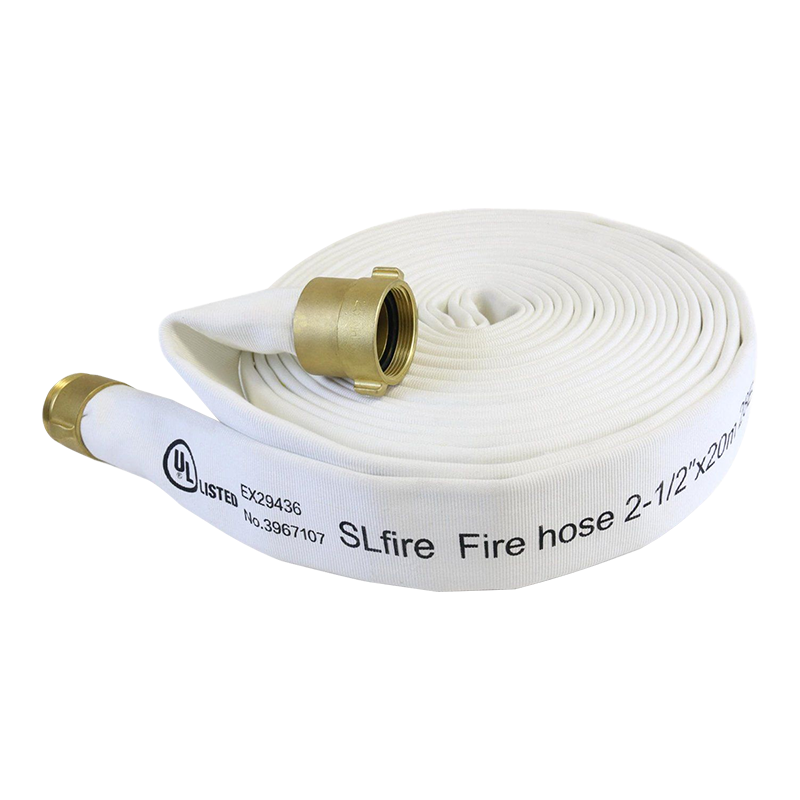
Jaket tunggal, liner karet EPDM Fitur • Jaket poliester keuletan 100% tinggi, lapis...
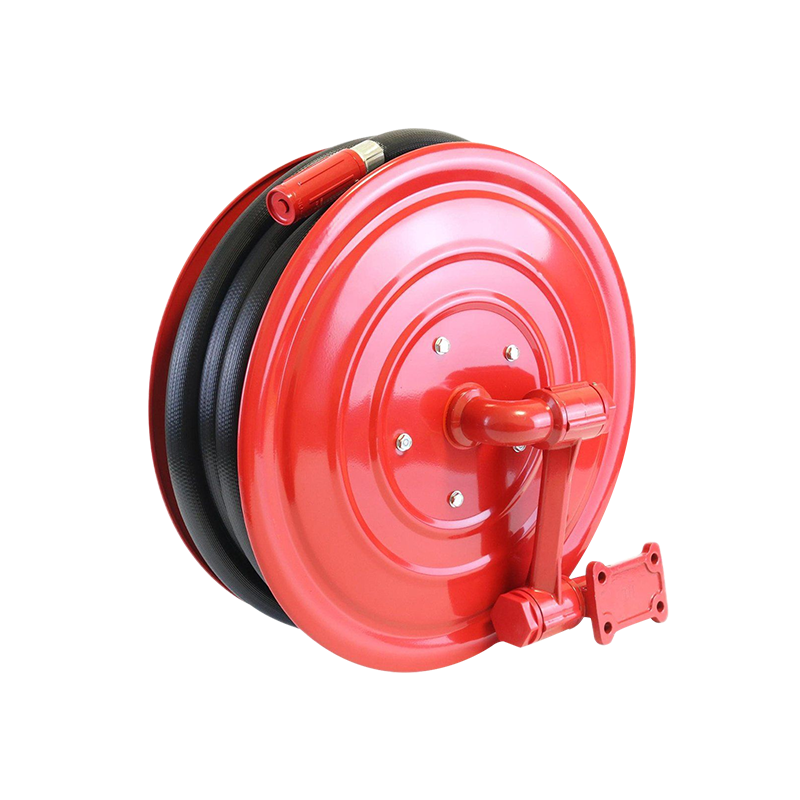
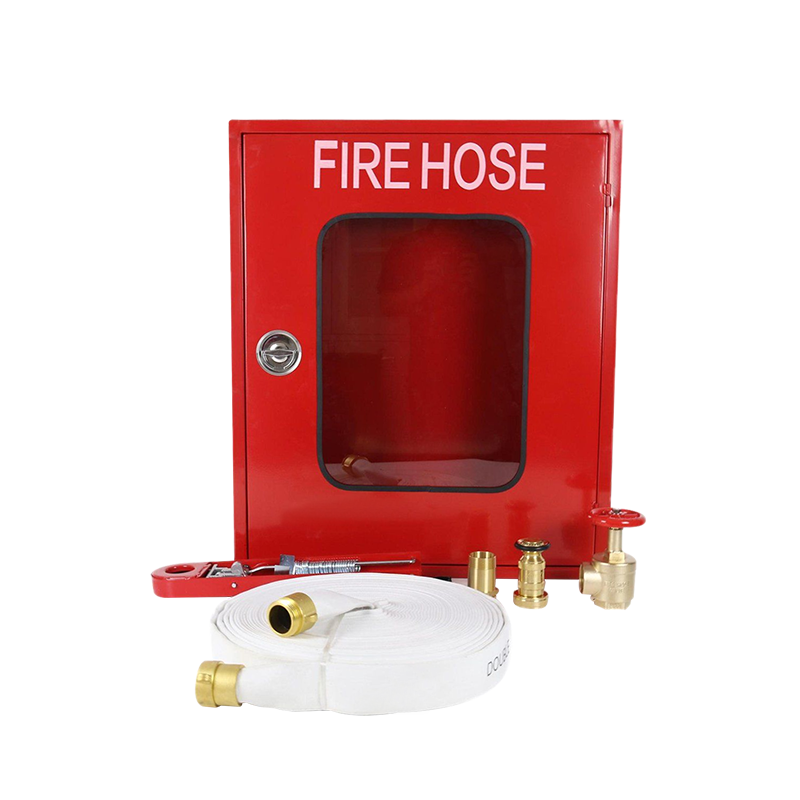
Lemari pemadam kebakaran dirancang untuk mengakomodasi selang kebakaran, katup, dan peralatan pem...
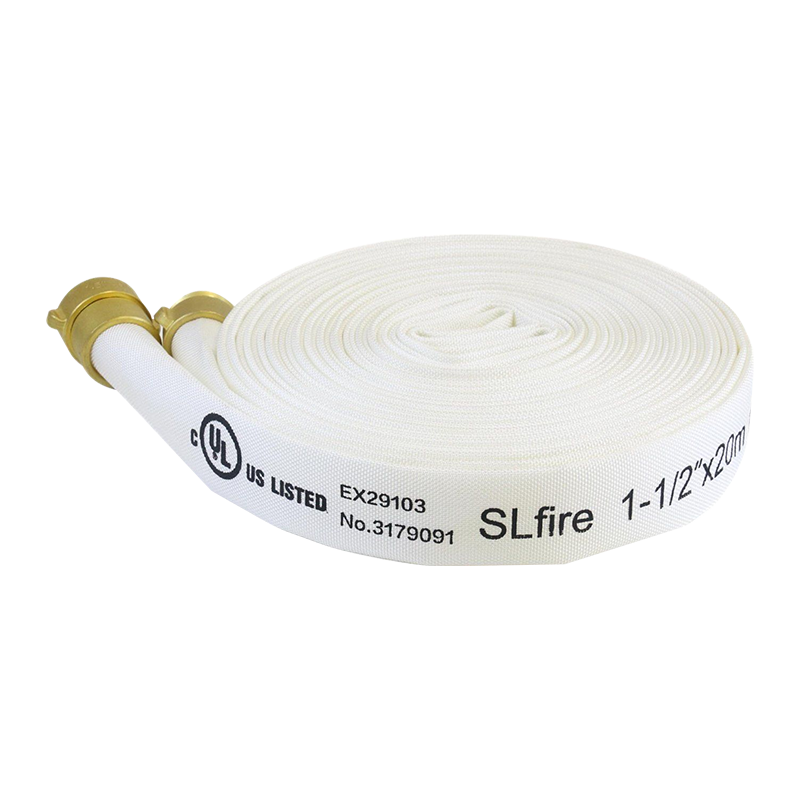
Jaket tunggal, liner TPU • Benang poliester berkekuatan tinggi, tenunan melingkar dalam te...
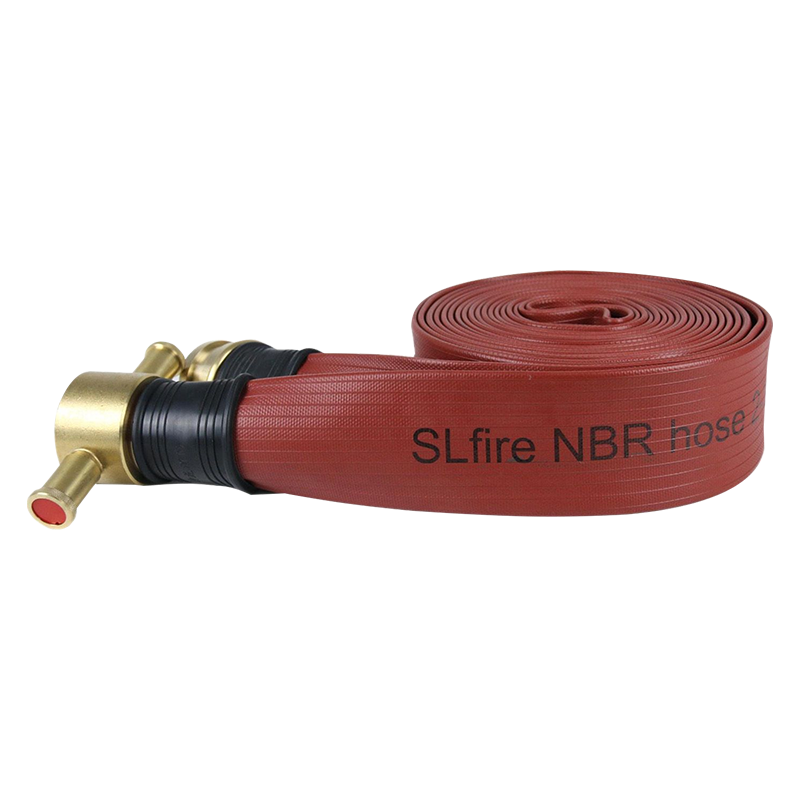
Selang tertutup nitril • Campuran Nitril/TPR sebagai penutup dan lapisan, dengan penguatan...
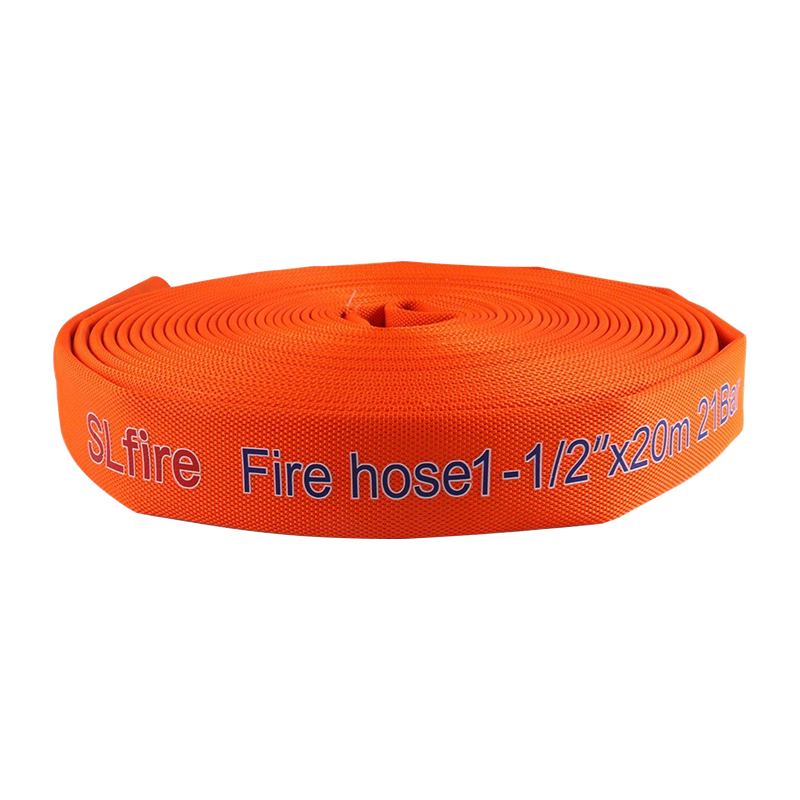
Jaket tunggal, liner TPU • Benang poliester berkekuatan tinggi, tenunan melingkar dalam te...
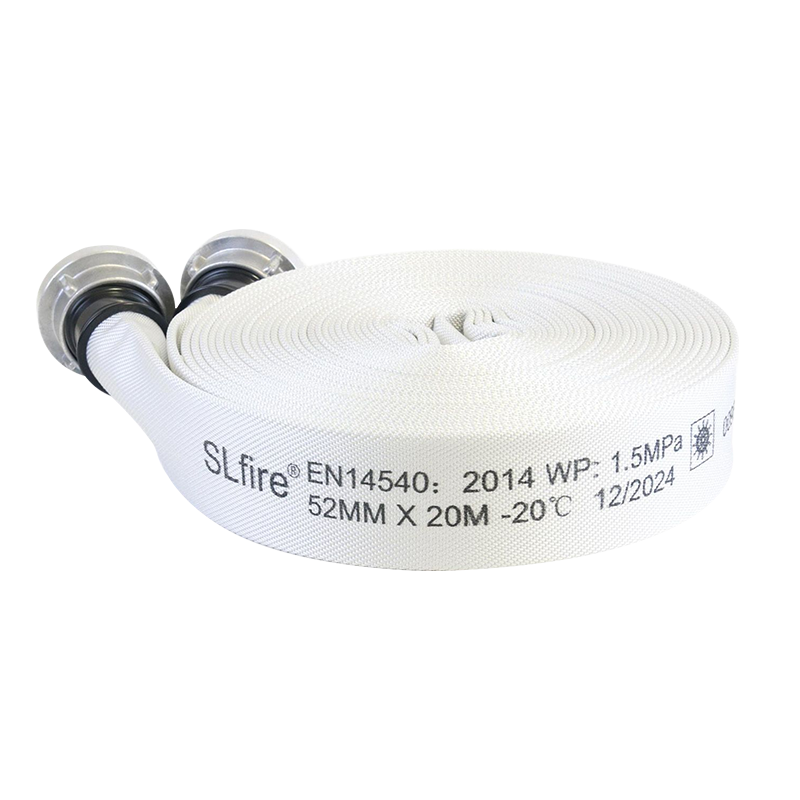
Selang laut Jaket tunggal, pvc liner • Benang poliester keuletan 100% tinggi, anyam...
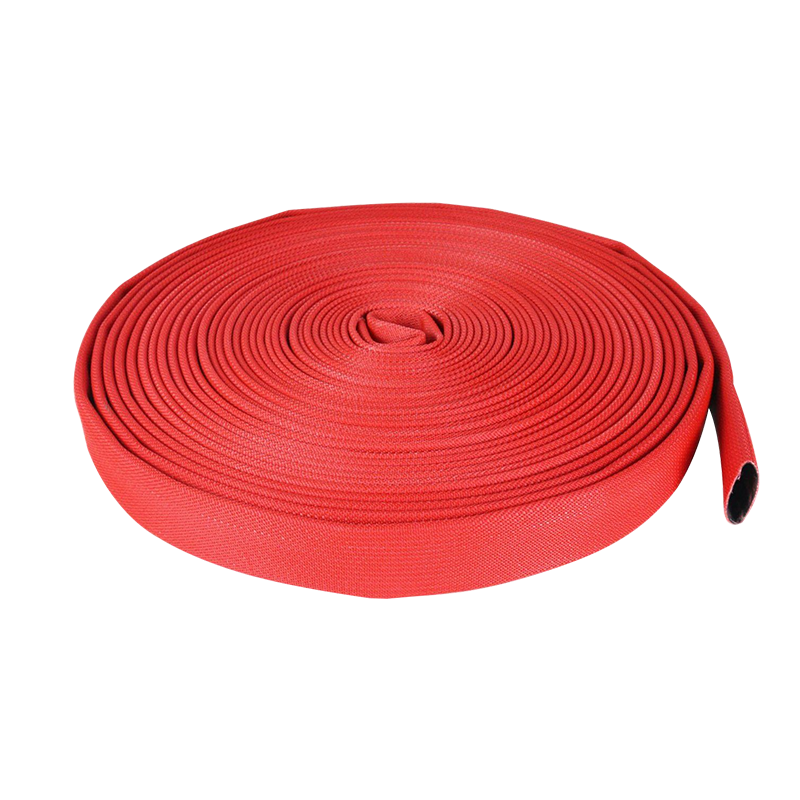
Selang laut Jaket tunggal, pvc liner, pu dilapisi • 100% Tinggi Kegeterteritas Bena...
 Hubungi kami
+86 159-5116-9511
Butuh dukungan
Kantor pusat
No.58, Kechuang Road, Sixiang Street Medicine Gaoxin District Taizhou City, Provinsi Jiangsu

Seorang kru yang merentangkan garis serang ke dalam struktur yang terbakar membuat pilihan bahkan sebelum nosel dibuka: jenis nosel apa yang ada di ujung selang. Lubang halus dengan ujung tetap ...
Copyright © Taizhou Shenlong Fire Science and Technology Co., Ltd. All Rights Reserved.
 Produsen Selang Kebakaran, Pabrik Selang Hidran Api